How meaningful a voice do you have when it comes to your own schooling? And how can we as young people make sure we have a meaningful voice?"
asks Maria, 16 years old, who has done a school internship with us.
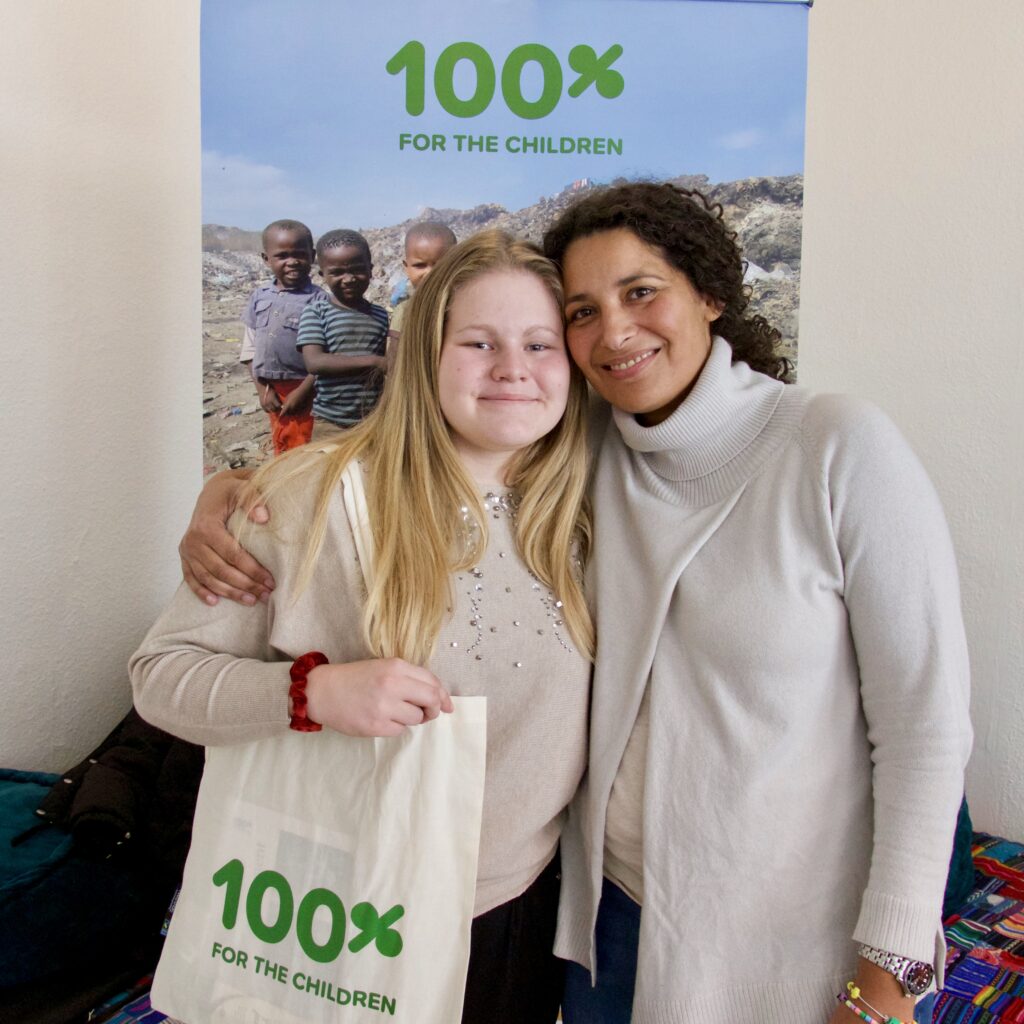
Maria asks some of the questions we also work with in 100% for the Children. Maria chose to do an internship at 100% for the Children to learn more about what it's like to work behind the scenes in a development organisation - and she teaches us more about young people's views on development. Read her full article, which questions whether schools take young people's political work seriously:
As a primary school student, I have a total of about 1 hour break every day at school, and at the same time I am in class for about 6 hours. However, I am also interested in attending student council meetings and being politically orientated. I'd rather spend my time on that because I think student council work is important and can make a difference. But when the student council work is during our breaks, not many people turn up because they would rather use their breaks to re-energise, which I think is fair enough. How can I be active and participative if my break has to be used for more work? When should I be able to sit down quietly and eat my packed lunch?
We have several examples of politicians and smaller organisations wanting us young people to step forward and express our opinions. But politicians should not focus on the young people who already have the desire and willpower.
Teachers and educators - on the other hand - are down-prioritising student engagement and up-prioritising spelling, reading and geometry. These are subjects that are also very important - and I think we can all agree on that - but surely young people's voices should not be downgraded because of this?
As a student council, we have participated several times in events that have focused on reducing bullying and grooming. We took all the tools home with us and were ready to work on the task. We came up with a proposal on how to communicate issues around bullying and grooming to different grade levels. We wanted to create a kind of theatre for the little ones to learn about bullying visually and to explain grooming in a proper way so that the children would understand it. Because we believe that these issues can be better communicated by young people, as bullying and grooming have evolved with the digital world. We therefore believe that it is easier for young people to learn from other young people who are in the same situation. Young people can take newer generations by the hand on the media journey they are embarking on.
Unfortunately, the lack of support meant that we never got started. I think that this particular project could have had a really big impact on all the students at the school, as these are topics that are very popular among young people.
I have just completed an internship with the Danish organisation 100% for the Children, and I discovered that one of their focus areas is to make young people's voices heard. They are currently trying to empower young voices because they can make a difference. Even though primary schools may not include student council work in the curriculum, there are organisations working to make young people's voices heard. Because political work starts at a young age. It's work that needs to be taken seriously. Also in primary schools.