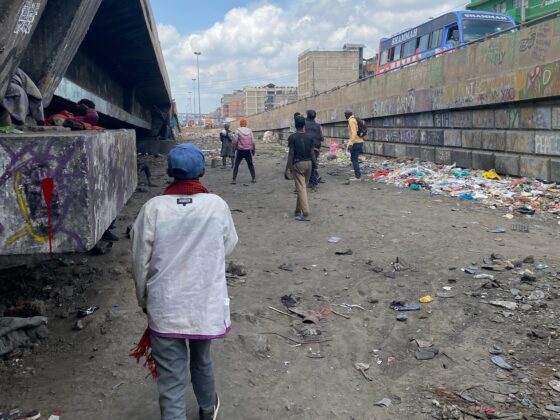
Child labour - a necessary evil?
Most of us have spent our childhood taking out the rubbish or collecting bottles for a penny. World Day Against Child Labour was created to highlight a different kind of child labour. The kind of work that damages children's health, prevents them from going to school and robs them of their childhood. But child labour is a complex problem with what we have chosen to call 'problematic solutions'.
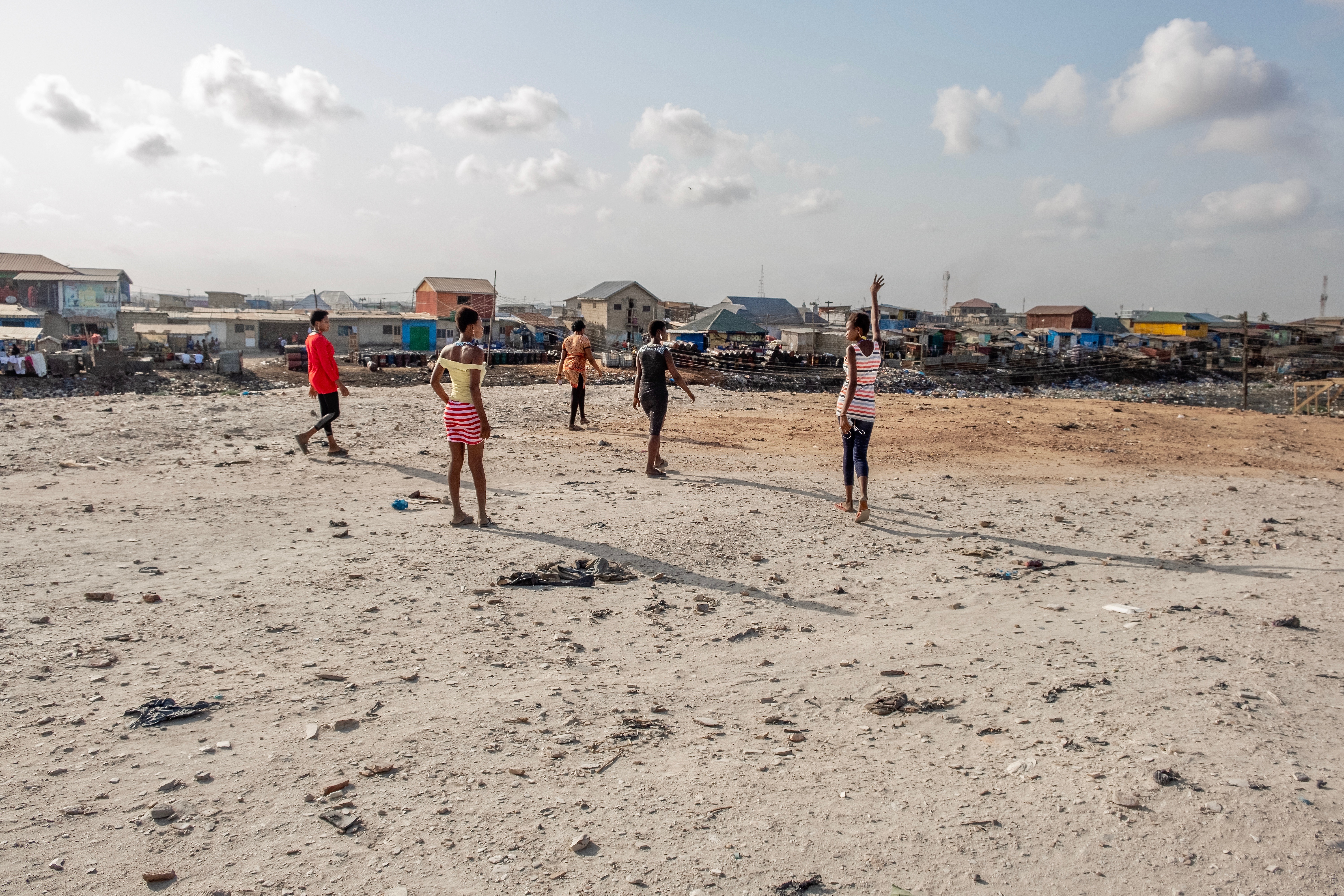
The main cause of child labour is, in most cases, poverty. Children are pushed into dangerous and harmful work when their parents cannot support the family and when the younger generation is unable to get a job. Poverty and high unemployment among young people are well-known issues in developing countries, including Kenya and Ghana.
100% for Kids has recently published the exercise booklet POSITION, in collaboration with University College Copenhagen, focuses on the everyday lives of street children in Accra, Ghana. Among these children, many of the boys work at the Agbogbloshie dumpsite. The dumpsite contains large amounts of electronic waste and can be downright dangerous to be in. In the booklet, we characterise this as a problematic solution...
On the one hand, labour provides a form of income for each child in the here and now and is thus a means to buy food and survive. On the other hand, labour carries a health risk. And a further risk that poverty and life on the streets will be reproduced for the next generation. The children need an alternative!
Things are moving in the right direction, but
In 2017, the International Labour Organisation (ILO) published the report: "Global Estimates of Child Labour: Results and trends, 2012-2016", which shows that the number of working children has been declining significantly since 2000. From 2000, when the ILO began tracking child labour trends, to 2016, the number fell from 246 million children to 152 million. This is certainly a positive development, but at the same time, the ILO states that the issue must be addressed if we are to succeed in our ambition to eradicate all child labour by 2025, as stated in SDG 8.
The report also shows that the positive development has had its best period until 2012, after which it has slowed down somewhat. Looking at the age distribution, almost half of the 152 million working children are aged between 5-11 years, 28% are between 12-14 years and 24% are between 15-17 years. The ILO emphasises that it is worrying that many of the child workers are so young. Young children cannot speak up in the same way as older children, and are therefore at greater risk of being abused, exploited or missing out on school.
At its core, it's about ensuring the best possible conditions for the world's children. It's about children's rights, society's responsibility and the state's obligation, as outlined in the articles of the Convention on the Rights of the Child. That said, it's more complex and nuanced than that, and not all countries may be able to fulfil all the articles of the CRC.
Education as the way forward
The problematic solutions that many of the street children in Ghana use to survive are not sustainable. Child labour should not be the only solution for children! Families should be able to provide their children with a childhood free from dangerous and harmful labour, where there is room for play and learning.
What if parents feel that their children need to help out at home or in the fields to make ends meet? What if the school is far from home and parents can't afford transport or school uniforms? What if only the family's male children are prioritised when it comes to schooling?
All of the above issues can be relevant for children in the areas where 100% for Children's partners work in Kenya and Ghana. There may be a need to create a framework that helps parents make the "right" decisions. This means that the children should go to school instead of working at home. This could be, for example, by serving food at school so that less food is needed at home. It can also be by engaging in dialogue with parents about the importance of education, as they may not have had the opportunity and are therefore not aware of the value of education.
Investment in education is needed to fight poverty and child labour in the long run. An investment in children will be an investment in the future.
You can read more about the different projects that 100% for the Children is involved in, where education is a common element, here.